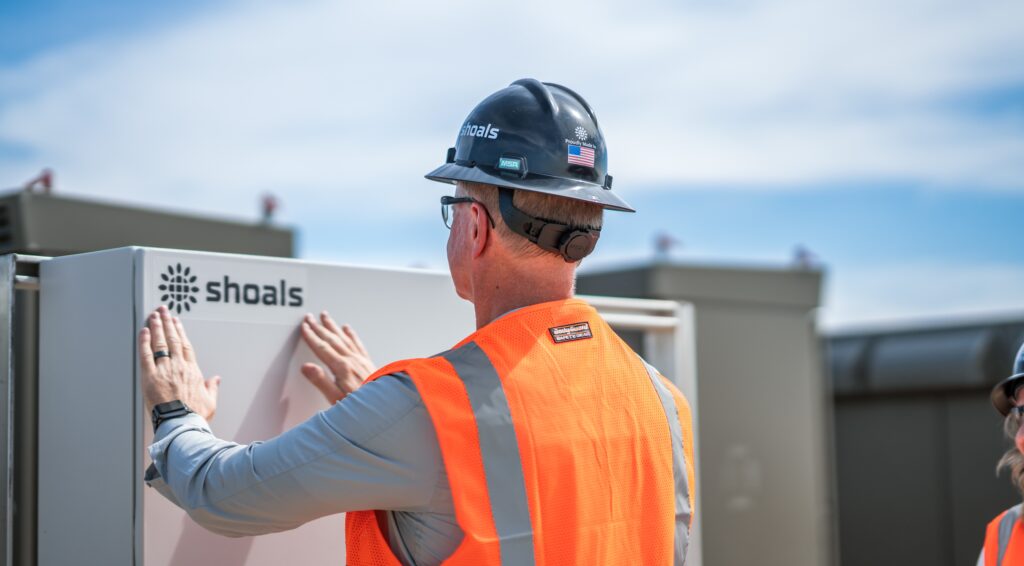
The dismantling of the Inflation Reduction Act (IRA) is a threat to American manufacturing, energy security, and economic growth. The energy incentives in the IRA have driven massive investment in both domestic manufacturing and deployment of critical energy resource projects. The current version of the “Big Beautiful Bill” is effectively placing bets on fossil fuels and longer-development energy technologies like nuclear, for the U.S. to achieve energy dominance. These bets are against all odds. If we pick winners and losers in the race to energy dominance, the U.S. will certainly fall behind China.
Anyone who has spent their career in clean energy knows that the road has not been easy to travel. I began my career in energy in 2014 working in residential solar, where we often called it the “solar coaster.” The industry was notoriously volatile – its adoption and growth rising and falling with the whims of state-level incentives and regulatory shifts. But since the passage of the IRA, we’ve seen something that once felt impossible: policy certainty for what was supposed to be a decade. That stability has catalyzed a wave of investment in U.S. clean energy – spurring growth in domestic manufacturing, accelerating project deployment, and unlocking innovation at a scale we’ve never seen before.
We must recognize that there is a strange and short-sighted phenomenon happening right now. Energy demand is growing for the first time in our lifetime while the House is trying to pass a bill that upends our ability to add enough energy to our grid. This does not have to be the path we take. What is needed to continue the resurgence in domestic energy manufacturing to meet the coming massive increase in demand? Glad you asked.
Number 1: Section 45X cannot be viewed in a vacuum
Section 45X, a tax credit that incentivizes U.S. manufacturers to produce clean energy components, is a cornerstone of the IRA’s domestic energy manufacturing strategy. It has already spurred the largest expansion of domestic manufacturing for Solar and Battery Energy Storage (BESS) products in U.S. history. Some proof points:
- U.S. solar panel manufacturing has grown 4x in the last two years, and American factories can now produce enough to meet all U.S. demand for solar panels.
- In 2017, the U.S. was 14th globally in solar manufacturing; we’re now 3rd.
- In the last two years, the U.S. Clean energy industry has announced $500 billion in new investments over 160 domestic manufacturing facilities – Shoals being one of these with our new Mega facility in Portland, TN.
But let’s be clear: 45X doesn’t operate in a silo. If the Investment Tax Credit (ITC) and Production Tax Credit (PTC) are gutted, the impact of 45X will be severely blunted. ITC offers upfront tax credits for installing clean energy, while PTC provides ongoing credits based on the electricity produced. Both credits, combined with 45X, support a full value chain – from component manufacturing to project deployment – that are crucial for reducing project costs and accelerating the deployment of critical energy resources. Without the combination, the entire domestic industry suffers.
Number 2: Hundreds of thousands of jobs will be vulnerable
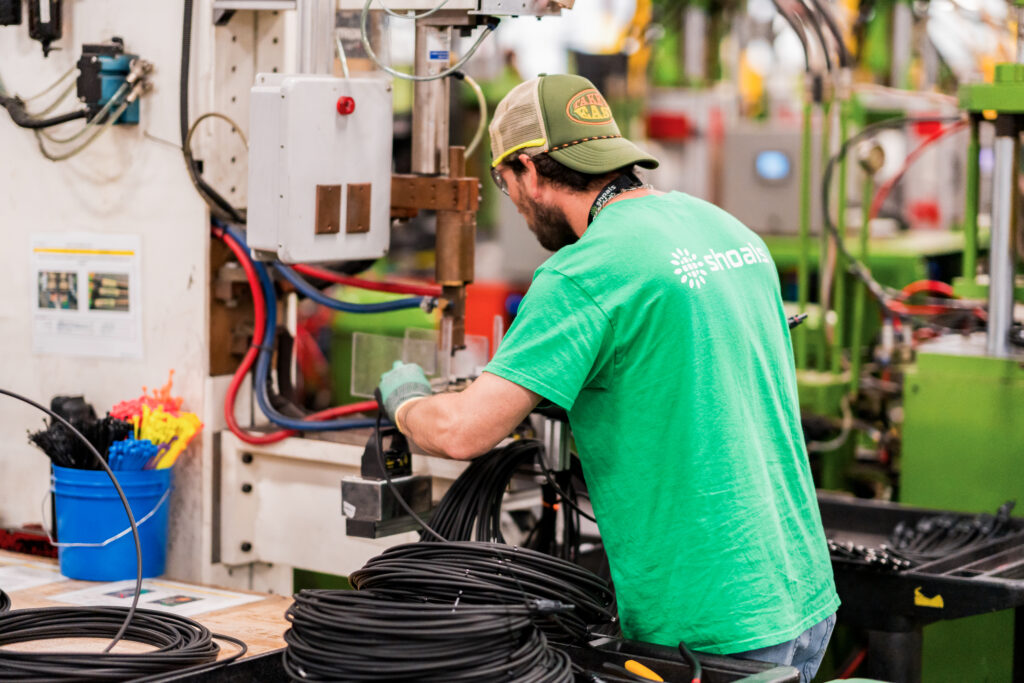
Love it or hate it, the IRA has created a massive number of jobs across the value-chain of the clean energy industry – from manufacturing, to construction, to engineering innovation and beyond. Clean energy jobs have been growing at twice the rate of the U.S. labor market, with over 150,000 jobs added in 2023 alone. According to a recent analysis by Canary Media Inc., every job in a clean energy factory creates three more in downstream and supporting industries. These are not abstract projections – they’re real opportunities for communities in Tennessee and beyond. The cruel irony is that roughly 80% of the jobs were created in red districts with House members’ who have voted to abruptly end these energy tax incentives.
Number 3: Unworkable FEOC language penalizes domestic manufacturers
The current FEOC (Foreign Entity of Concern) standard, as written, punishes domestic manufacturers like Shoals due to its high complexity and unworkability. I think we can all agree that American energy tax credits should not go to FEOC-owned entities, but the language in the draft bill is so vague and confusing that it’s restrictions could be interpreted to apply to virtually every U.S. manufacturer. That means manufacturers like Shoals, which is building Tennessee-made energy solutions, will be penalized while foreign competitors gain ground by navigating around the ever-changing tariffs and maintaining price competitiveness. Surely, Republican leaders, who have championed national security and domestic energy manufacturing, don’t want to see American jobs and innovation undermined by our own policies.
Number 4: Achieving Trump’s energy abundance agenda is impossible without solar & storage
For the first time in seven decades, we are seeing an increase in energy demand from population growth, datacenters and AI adoption, and increased domestic manufacturing. This is something President Trump recognized when he declared an energy emergency at the beginning of his 2nd term. We agree on the fact that the U.S. needs to build more power to meet our growing demand, and we need to do it quickly. Where we disagree with President Trump and House Republicans who support the Big Beautiful Bill is the notion that cutting job-creating, domestic energy incentives is the right strategy to quickly add more energy to the grid. Of the added capacity onto the electricity grid in 2024, an astounding 81% was solar and BESS. Solar is overwhelmingly the fastest solution to deploy to the tune of 100x faster than net new nuclear. If you ask me, that fact is both big and beautiful…
We are in unchartered territory – not just because the current bill threatens the jobs, factories, and investments the solar industry has created, but because failing to meet the rise in energy demand is potentially devastating. According to the Solar Energy Industries Association (SEIA), solar and BESS account for 75% of all energy projects currently under development, making them the dominant technologies in the pipeline. Without solar and BESS, we accept the risk of blackouts, price spikes, and the need to ration electricity. And that is a choice we do not have to make.
Anything else we should talk about?
Now that we have established the benefits of preserving the IRA tax credits to some workable extent, let’s address the elephant in the room. Naysayers of solar say that the industry should be able to operate without tax incentives or subsidies. It’s worth remembering that while clean energy is often scrutinized for its incentives, as Elon Musk recently noted, the oil and gas industry has been subsidized for decades – through tax breaks, royalty relief, and infrastructure support. These subsidies have long shaped our energy landscape, often shielding fossil fuels from the same market pressures that renewables have had to weather. The IRA simply leveled that playing field, offering clean energy the kind of policy support that fossil fuels have enjoyed for generations.
We subsidize things we want more of – that is what tax incentives are for. Do we want more energy deployed? Do we want it to be deployed quickly? Do we want it to be affordable? Do we want it to create high-quality jobs? I assume the answer to all of these is an overwhelming yes from both sides of the aisle. If that is the case, then why are we gutting the very thing that is enabling all of this at scale today? We are trading affordable energy, well-paying jobs, a resurgence of domestic manufacturing, and cleaner air to breathe – for what exactly?
Land the plane, please.
But enough reciting of facts and data. I know from years of experience that those only take us so far. I need to make you feel something. Here is that attempt – fundamentally this is about way more than preserving tax credits for a critical American industry. It’s about whether we, as Americans, want to lead or follow. Whether we want to add resilience to our electricity supply or suffer the consequences. Whether we want to promote innovation and progress or bury our heads in the sand. Whether we want to build the future here in Tennessee and more broadly in the U.S.- or watch it be built elsewhere. It is our choice. Call your Senators today, before it’s too late.