As solar development scales across the U.S. and globally, clean energy project developers, owners and operators are increasingly turning to agrivoltaics as a strategic solution to land-use constraints, rising O&M costs, and community engagement challenges. Agrivoltaics combines the use of land for solar energy generation and agriculture and offers a compelling path forward for maximizing project value while meeting sustainability and permitting goals. This blog explores how agrivoltaics is evolving from a niche concept to a mainstream development strategy. It offers real-world examples, performance insights, and infrastructure solutions that help professionals in the solar industry design smarter, more resilient projects from the ground up.
What is agrivoltaics?
Agrivoltaics is short for agricultural photovoltaics and is the practice of using the same parcel of land for both solar energy generation and agricultural activity, such as grazing, growing crops, or supporting pollinator habitats. It is a dual-use model that allows farmers, developers, and utilities to get more value out of land while addressing energy and sustainability goals.
In practice, agrivoltaics can take several forms:
- Pollinator-friendly plants and flowers that support biodiversity and meet land-use permitting goals
- Sheep grazing under or around solar panels (to control vegetation and reduce mowing)
- Crop cultivation in rows between panel arrays or even directly underneath elevated racking
According to the National Renewable Energy Laboratory (NREL), agrivoltaic systems can enhance land productivity by up to 60% through synergies increasing energy, plant, and animal production.
It’s not just about maximizing land use. Agrivoltaics also addresses common pain points in the solar industry, especially around land access, community buy-in, and long-term operations and maintenance (O&M). And as solar development expands into more agriculturally productive or contested regions, agrivoltaics is quickly becoming a viable solution for balancing stakeholder priorities.
Why is agrivoltaics gaining ground now?
The growth of agrivoltaics isn’t just a trend. It’s a response to real-world challenges and opportunities facing the energy and agriculture sectors today.
1. Land pressure
As utility-scale solar projects scale up, competition for open land intensifies, often creating tension between renewable energy goals and agricultural preservation. Agrivoltaics offers a compromise by preserving agricultural productivity while enabling clean energy development.
2. Rising O&M costs
Grazing animals like sheep can significantly reduce vegetation management costs by replacing mechanical mowing. This not only lowers O&M expenses but also improves safety by reducing fire risk and minimizing the use of herbicides.
3. Climate resilience
Research from the University of Arizona and NREL shows that crops grown under solar panels can use less water, maintain higher yields in hot climates, and even cool the panels themselves—improving electrical performance.
4. Public support and permitting
Community acceptance is critical for new solar developments. According to DOE-funded research, projects that include agrivoltaic features—like local grazing or pollinator habitats—see significantly higher public approval and are often more successful in securing local permits.
5. Utilities, IPPs, and EPCs leading the way
Major power producers have been embracing agrivoltaics as a sustainability initiative and to stand out among their peers demonstrating a long-term approach to their projects. They have also been viewing agrivoltaics as a strategic part of their land-use and project development plans.
Real-world agrivoltaics: lessons from the field
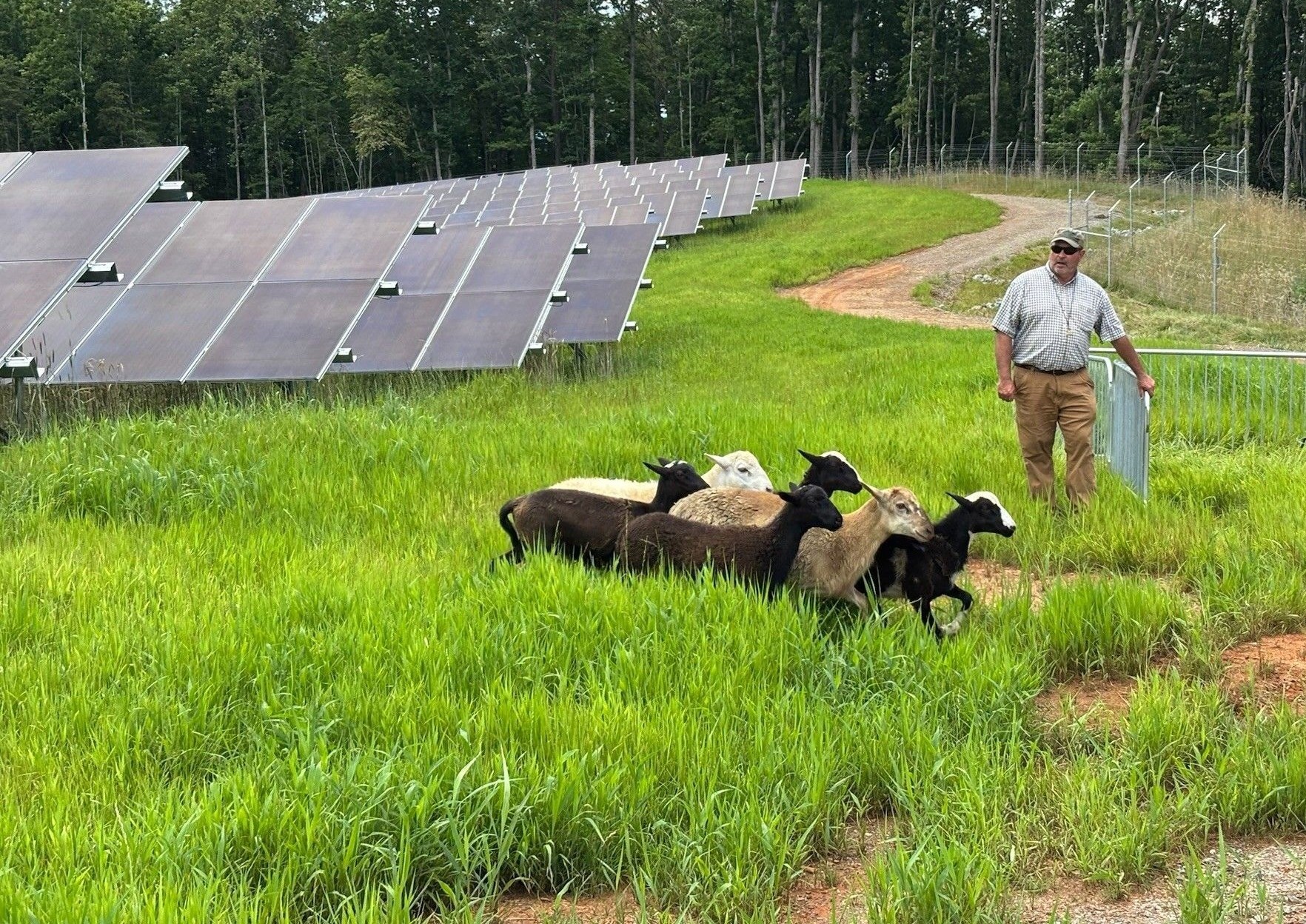
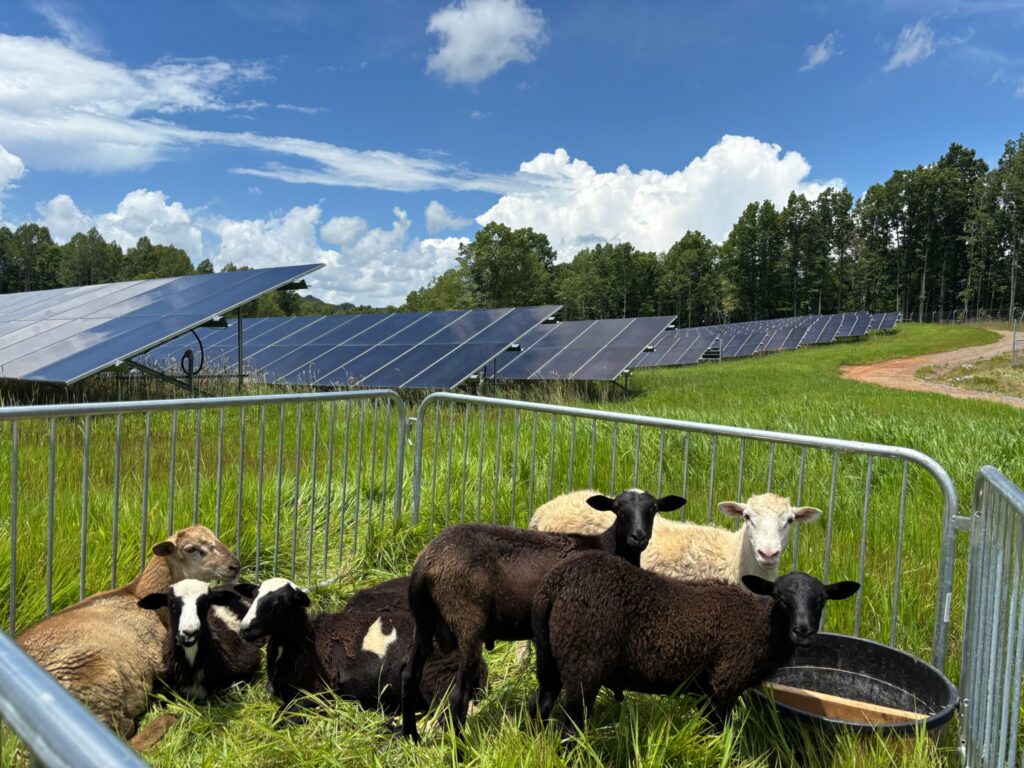
Many of our customers at Shoals Technologies Group see agrivoltaics strategy as a clear win for clean energy, the environment, and rural communities alike. For instance, at Energix Renewables’ new project sites in Virginia, agrivoltaics is in full effect with sheep grazing across nearly 1300 acres. The site manager explains that around 450 sheep are rotated section by section to manage vegetation naturally. “They just go where the grass is tall—that’s where the good food’s at,” he shared. While the sheep handle most of the vegetation control, the company contracts a grazing service that performs a single mow if needed to tidy up areas the animals miss. This approach significantly reduces the need for mechanical mowing, cutting costs while supporting a more regenerative form of land management.
The sheep are not monitored around the clock, but local farmers visit the site daily to check on food and water levels. “It’s a win-win,” the site manager said. “It’s absolutely great. It’s cutting mowing costs.” Energix now has multiple projects using sheep grazing, proving the value of agrivoltaics at scale. And while the region’s rainfall typically eliminates the need for solar panel cleaning, the team noted that pollen buildup in spring is the only temporary concern and is usually resolved by the next rain. This hands-off, eco-friendly approach reflects a growing shift in how solar developers manage large-scale sites with sustainability in mind.
A cultural moment: Pastures and Panels
In 2024, the American Solar Grazing Association (ASGA) released Pastures and Panels, a short documentary film highlighting the lives of farmers who manage sheep grazing under solar arrays. It offers a powerful, human-centered look at how agrivoltaics strengthens rural economies and deepens community ties to renewable energy projects.
Premiered at RE+ Anaheim, the film has been making the rounds at environmental film festivals across the U.S., including the Downstream Environmental Film Festival in Minnesota. It’s now available online, and it’s well worth watching for anyone considering agrivoltaics as part of their development strategy.
Where Shoals comes in
As agrivoltaic systems grow in popularity, they bring new challenges for design, layout, and operations. At Shoals Technologies Group, we help our customers adapt with flexible, future-ready Electrical Balance of System (EBOS) solutions built for field conditions, including those with vegetation, grazing animals, and customized layouts.
- Harness Flexibility: Our plug-and-play harness systems simplify field wiring, even when panel rows are spaced wider or elevated to accommodate agriculture or livestock access.
- Fewer Ground Runs: Shoals Big Lead Assembly (BLA) above ground trunk bus minimizes trenching and reduces the number of wire runs across active land, helping preserve soil health, native vegetation, and crop access.
- Secure Wire Management: Above-ground cabling should be properly secured to prevent grazing animals from dislodging it. Our cable management solution is designed to support this need.
- Durability in the Field: All our products, including combiner boxes, fuses, and connectors are built to withstand moisture, dust, and impact, which are critical in environments with animal movement, irrigation, or uneven terrain.
- Load-Break Disconnects: Improved safety and ease of maintenance by enabling isolated shutoff without requiring combiner access. This is ideal when physical access is limited due to vegetation or animals.
- 2kV Compatibility: As agrivoltaic projects scale, our higher-voltage EBOS components enable more efficient layouts with less infrastructure per acre.
- Shoals mini BLA: With solutions like the mini BLA, we can support open-row or low-obstruction layouts, giving us the flexibility to adapt to the specific needs of agrivoltaics projects.
Whether you’re designing a pollinator-friendly community solar site or building a utility-scale grazing array, Shoals offers the infrastructure you need to streamline installation, reduce long-term costs, and support dual-use goals.
Looking ahead
Agrivoltaics is no longer experimental. It is becoming a key part of how the solar industry reimagines clean energy infrastructure. As communities expect more from renewable projects, dual-use development offers a practical and sustainable path forward.
By combining energy production with agriculture, developers, EPCs, and IPPs can deliver solar projects that support the land, strengthen local economies, and advance the energy transition. Shoals is proud to support this vision, one acre at a time.
Considering open row layout or agrivoltaics for your next project? Contact us today to learn how Shoals’ high-quality, reliable EBOS and wiring solutions can help bring it to life.