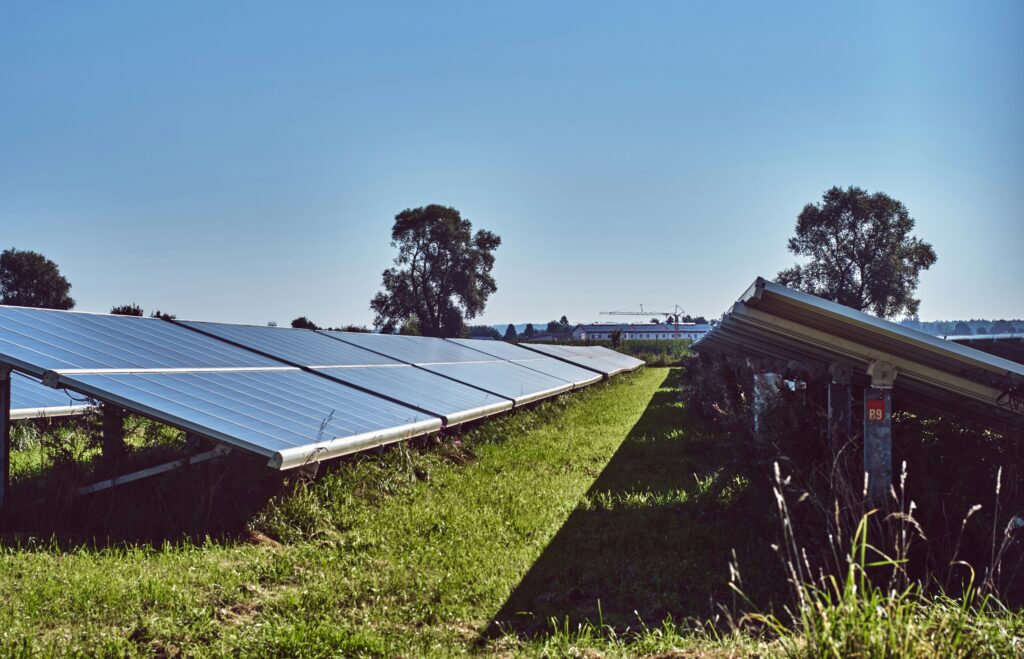
As solar energy systems grow more advanced, understanding their underlying architecture is more critical than ever. The solar industry has a language of its own, and whether you are a developer, installer, asset manager, or just getting started in the field, speaking it fluently is essential.
This blog breaks down the core building blocks of a solar PV system: what they are, how they work, and how they contribute to efficient, scalable power generation. From modules and circuits to strings and combiner boxes, we’ll explore how all the pieces come together to deliver clean, reliable energy. Whether you are new to solar or looking for a refresher, this guide will help you build fluency and confidence in solar fundamentals.
What is a solar array?
A solar array is a group of solar modules (often referred to as solar panels) organized to work together and produce a combined power output larger than that of an individual module. Think of a solar array as the “engine” of your solar system. It’s what captures sunlight and converts it into electricity at scale.
Solar arrays can serve many types of installations. They might power a single building, a school campus, or even entire neighborhoods. On a larger scale, multiple solar arrays can be linked together to create a solar farm, which supplies electricity directly to the utility grid.
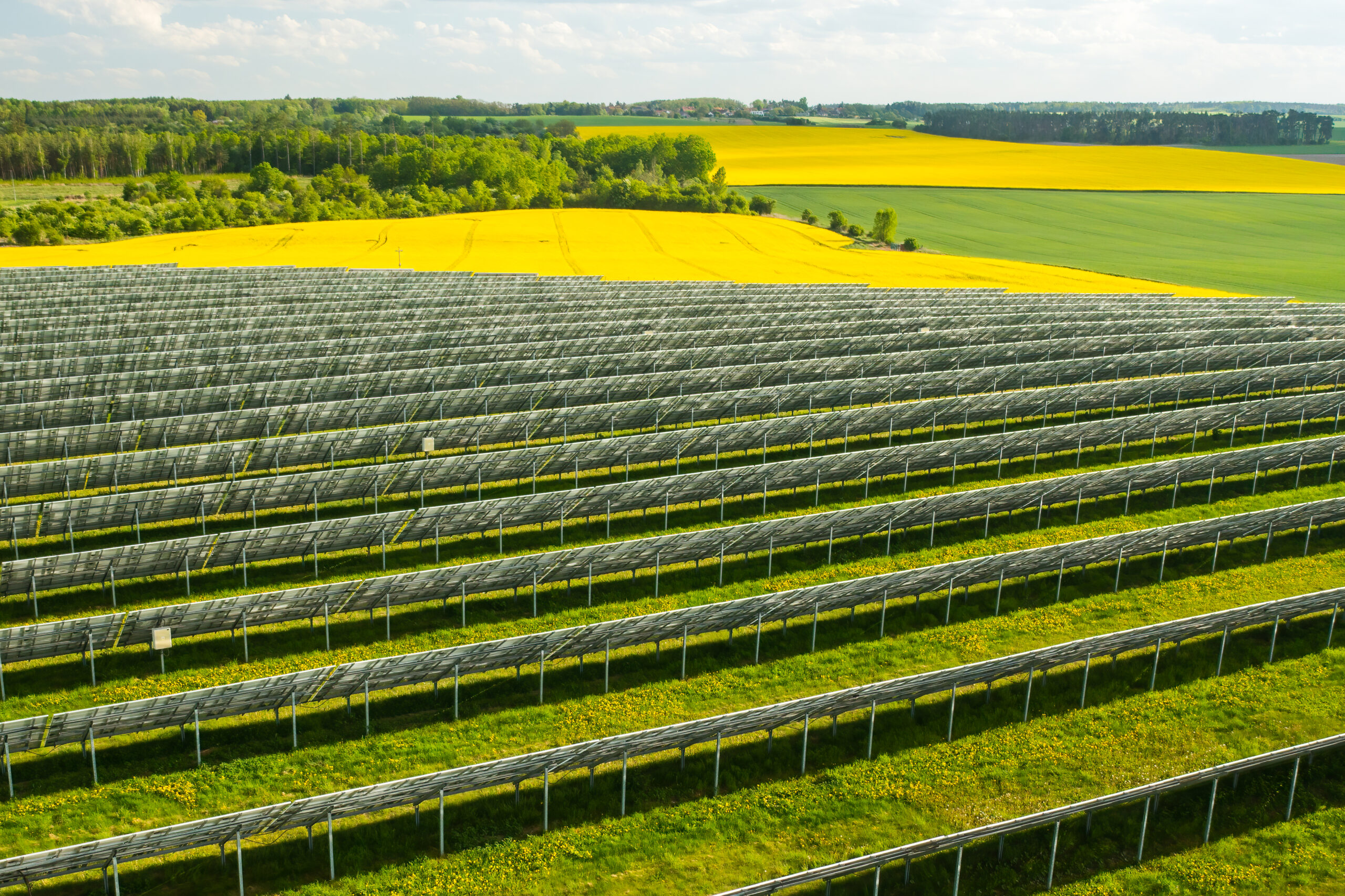
These arrays can be built in almost any location with adequate exposure to sunlight. The more sunlight a panel receives throughout the day, the more energy it can produce. That’s why you often see solar arrays in open fields, on hilltops, or on rooftops. These are all places where shade is minimal and exposure is optimal.
The location of the array also plays a key role in determining what kind of electrical balance of systems (EBOS) components are needed. These components gather, manage, and transmit the generated power to its final destination—whether that’s your home’s lights or the wider power grid.
What are DC blocks?
As solar projects scale up, the system architecture becomes more complex. In large installations, solar arrays are often divided into subsections known as DC Blocks.
A DC Block is a subsection of a solar array, typically defined as a group of solar modules that all connect to a single central inverter. The inverter plays a crucial role—it converts the direct current (DC) electricity generated by the modules into alternating current (AC), which can be used by the power grid.
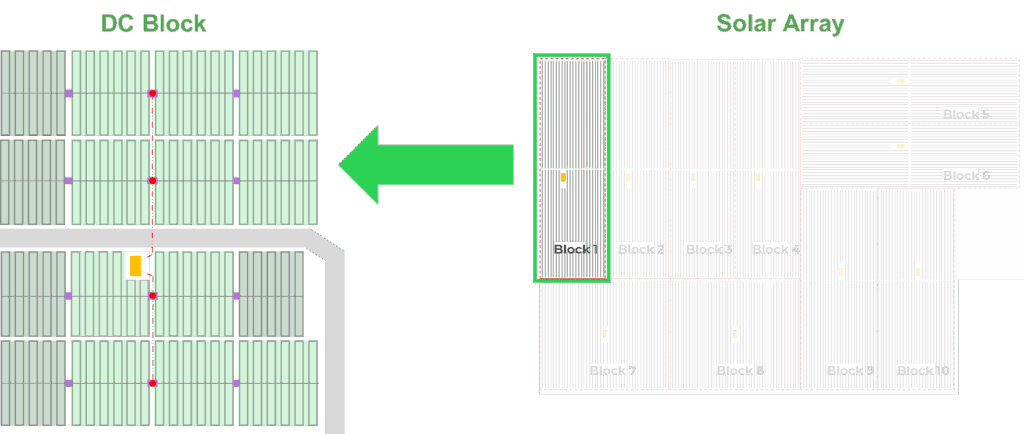
Dividing arrays into DC blocks allows engineers to manage and monitor different portions of the system more effectively. If something goes wrong in one block, it won’t necessarily impact the rest of the system.
Understanding DC circuits
Each DC Block can be further subdivided into DC circuits. These are usually composed of tracker segments or solar module strings that connect to a single combiner or DC disconnect.
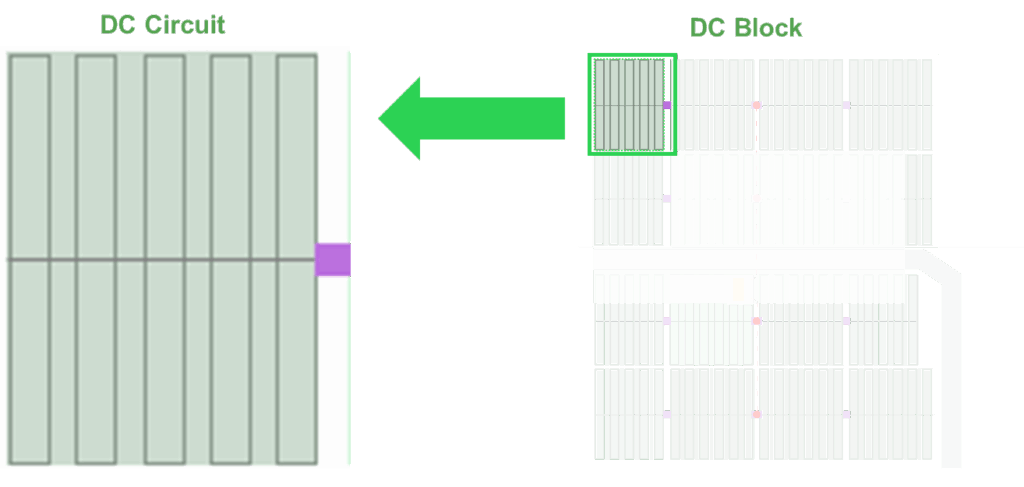
A DC circuit is a critical unit of electrical organization. By grouping strings into circuits, developers can better control how power is aggregated, protected, and routed to inverters. It also enables safer maintenance and easier fault detection.
Solar modules and cells
Let’s now zoom in to the smallest building block of the system: the solar module. Each solar module is made up of many photovoltaic (PV) cells. These are the tiny components that convert sunlight into electricity through the photovoltaic effect. PV cells are non-mechanical devices. They have no moving parts, yet they play the starring role in harnessing solar energy.

A single cell produces only a small amount of power, so they’re grouped together and connected electrically within a module to produce a larger amount of electricity. Solar modules generate direct current (DC) electricity, which is either stored in batteries or converted to AC using inverters to be fed into the grid.
There are two primary types of solar modules in use today: crystalline and thin-film. Each has its own advantages and trade-offs.
Crystalline solar modules
Crystalline solar modules are comprised of crystalline silicon photovoltaic cells (c-Si). Each cell is a slice of a single crystal of silicon that is grown expressly for the purpose of being used in solar modules. Crystalline solar modules, compared to thin-film modules, are typically:
- More efficient
- More expensive
- Lower Voltage (Example: 51.79 VDC)
- Higher Current (Example: 13.69 A)
Thin-Film solar modules
Thin-Film solar modules are made by depositing one or more thin layers of photovoltaic material onto a substrate, such as glass, plastic or metal. Thin-film solar modules, compared to crystalline modules, are typically:
- Less efficient
- Cheaper
- Higher Voltage (Example: 228.8 VDC)
- Lower Current (Example: 2.89 A)
Key electrical terms for solar to know
Understanding solar power also means understanding a few basic electrical terms:
Current: The rate of electric charge (usually carried by electrons) flow, measured in Amperes or Amps (A).
Voltage: The electrical pressure or force that drives current, measured in Volts (V).
Resistance: The opposition to current flow, the force that is resisting the movement of the electrons, measured in ohms (Ω).
Power: The rate at which energy is transferred in a system, measured in watts (W).
Power = Voltage × Current
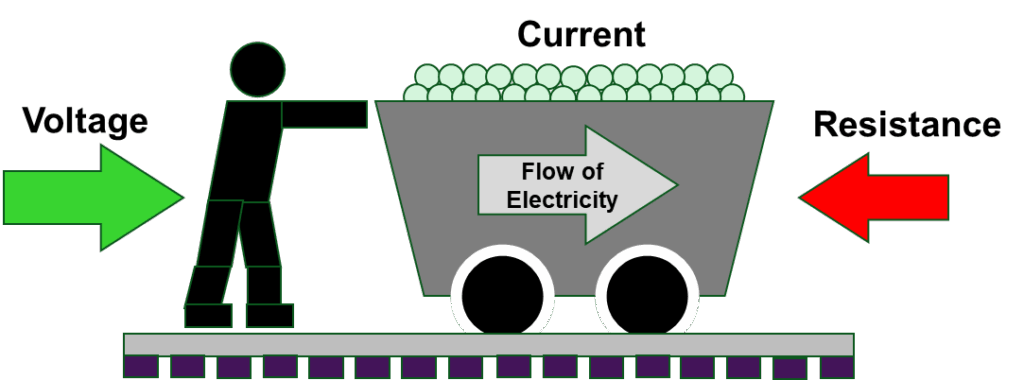
Electrical Relationships
There can be no current without voltage (no flow without a driving force), but there can be voltage without current (a force with nothing to move). If the voltage does not exceed the resistance of a circuit, no current will flow (an open circuit has no path that the current can follow at a given voltage).
In the mine cart example, you may not be able to push hard enough (high enough voltage) to move it up the hill (higher resistance).
Let’s put it in simple terms: One Volt (V) will push 1 Ampere (A) through 1 Ohm (Ω)
Here is a breakdown of some useful formulas:
Current (A) * Resistance (Ω) = Voltage (V)
Voltage (V) / Resistance (Ω) = Current
Voltage (V) * Current (A) = Power (W)

Series vs Parallel Circuits
In an electrical system, power sources are often connected in circuits which are either in series or parallel.
Series Connection
In a series circuit, components are connected end-to-end, like a chain. This architecture creates a single path for the current of the circuit to follow and results in a circuit with an aggregate voltage of its components while maintaining a constant current.
- Modules are connected end-to-end.
- Voltage adds up, current stays constant.
- If one module fails, the entire string may stop working.
Parallel Connection
In a parallel circuit, components are connected parallel to each other. This means that the positives of each component are connected to one another and the same goes for the negatives of each component. This creates multiple paths for current to split and flow through.
- Modules are connected positive-to-positive and negative-to-negative.
- Current adds up, voltage stays constant.
- If one module fails, the rest can still function.

What are solar module strings?
To reach the target voltage for a system, solar modules are connected in series to form strings. The number of modules per string depends on both the voltage rating of each module and the desired system voltage. Let’s look at two examples:
Crystalline module example:
- Desired system voltage: 1500 VDC
- Module voltage: 51.79 V
- Module current: 13.69 A
- 1500 ÷ 51.79 = 28 modules per string
Thin-film module example:
- Desired system voltage: 1500 VDC
- Module voltage: 228.8 V
- Module current: 2.89 A
- 1500 ÷ 228.8 = 6 modules per string
Each string is then connected into a circuit, and multiple circuits come together to form a DC block. It’s all about scaling up, starting with tiny solar cells, and ending with a solar farm capable of powering hundreds or thousands of homes.
Bringing it all together
From solar cells to circuits, strings to blocks, the architecture of a solar power system showcases the innovation and precision behind clean energy. Understanding these components isn’t just for engineers. Whether you’re investing in a solar project, managing assets, purchasing solar components, or exploring a career in clean energy, knowing how the pieces fit together gives you the power to make smarter, better-informed decisions.
Stay tuned for the next edition of Solar Speak 101, where we’ll explore mounting structures, inverters, EBOS solutions, and strategies to boost long-term system performance.
Want to future-proof your next solar project?
Contact Shoals today to learn how our high-quality, factory-tested EBOS, wiring, and other solar solutions can help you build faster, simplify execution, and drive long-term value.