Utility-scale solar is under more pressure than ever. AI-driven data center growth is straining the grid, IRA incentives are winding down, and developers are expected to build faster, leaner, and with fewer skilled electricians. Labor shortages, tight schedules, and swelling interconnection queues mean the industry is scrutinizing every part of the build process to recover time.
In conversations with engineering, procurement and construction (EPC) partners and solar project developers, one theme keeps coming up: having real, measurable data that shows where efficiencies are gained.
To answer the call, Shoals has recently conducted a controlled installation time study to capture real world data on comparative differences between our patented Big Lead Assembly (BLA) trunk bus and traditional insulation piercing connectors (IPCs). The results support the narrative we’ve known for years: prefabricated solutions like our BLA install faster and safer than IPCs.
This blog provides insight into how this time study was conducted and the key outcomes.
Why we conducted this BLA vs IPCs time study
We wanted data that reflects real installation conditions, not lab-optimized scenarios.
Industry assumptions were clear:
- IPCs take longer because complex field terminations slow crews down.
- Quality varies by installer, weather, and site conditions.
- Prefabricated trunk buses are clearly faster, but by how much?
To answer those questions, Shoals engineers designed a neutral, side-by-side test comparing full string installation workflows using BLA versus IPCs.
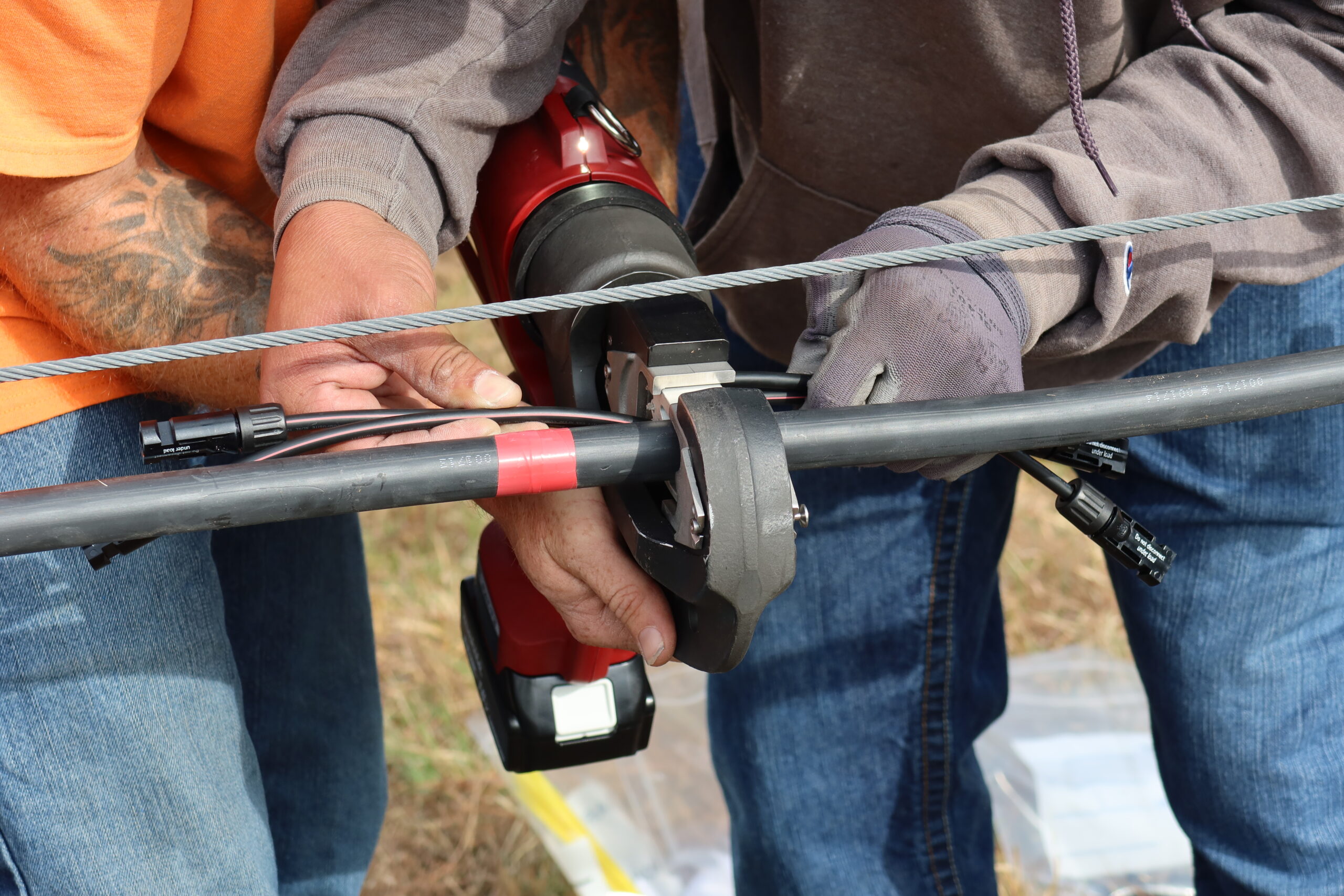
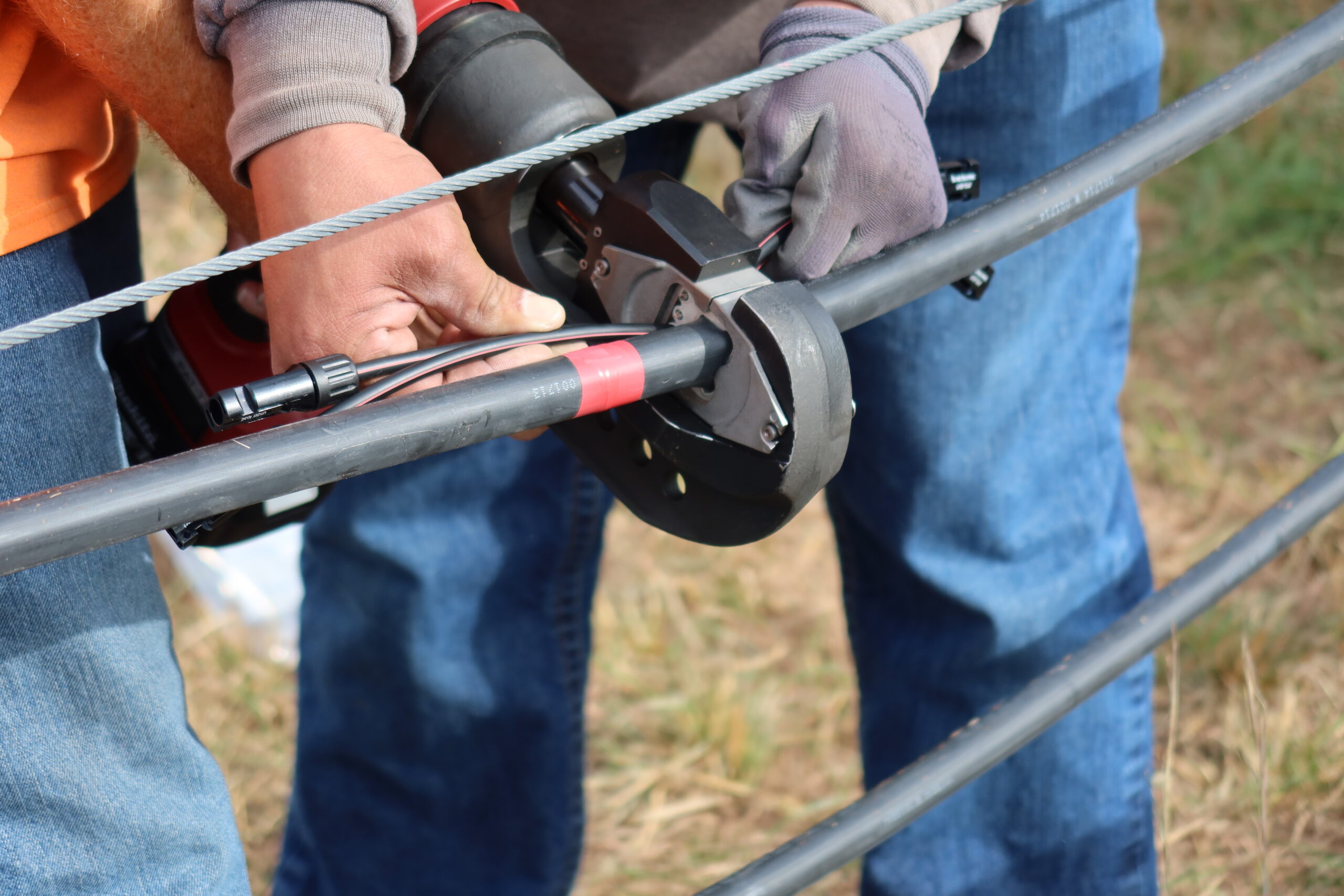
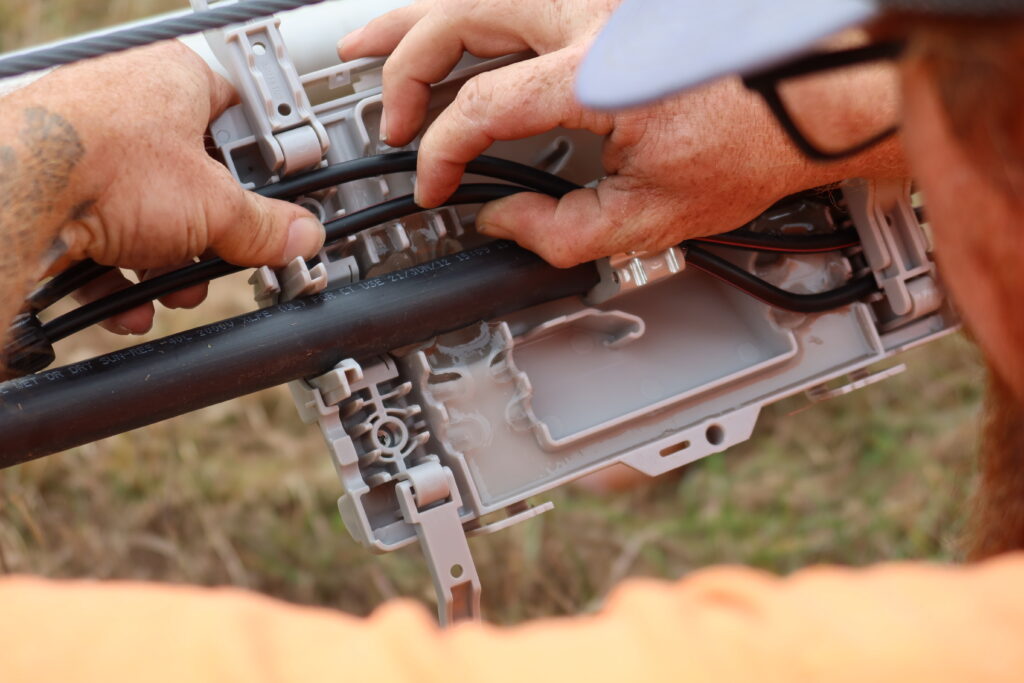
It takes two people and a lot of effort to install an IPC.
How we structured the BLA vs IPCs time study
Shoals is well known for our engineering acumen and ability to simplify our customers’ project layouts and solve complex problems. The method was intentionally simple to ensure that results are clear.
We approached an experienced regional EPC known for completing more than 1,400 solar projects across the Southeast to help us conduct this study. They weren’t Shoals installers. They weren’t IPC or BLA specialists. They were just the kind of crew that shows up on every utility-scale project: hardworking and under pressure to build fast.
We set up a demo section — 18 strings with IPCs and 18 with Shoals BLA — with conditions each string would normally face, and watched the crew get to work.
BLA vs IPC Study Setup
- Demo size: 18-string installation
- Crew: Small, mixed-experience team with equal familiarity with BLA and IPCs
- Conditions: Identical terrain and environment
- Mounting: Same racking layout and string lengths
- Measurement goal: Measure the entire installation process of both string wire and BLA/IPC
The goal was simple: measure installation time in a way that mirrors real-world IPC and BLA work. We wanted apples to apples: same hands, same tools, same environment.
IPC E-W Components
- Roll out the trunk wire
- Measure and cut trunk to length
- Measure and cut drop wires to length
- Field install connectors onto drop wires
- Install the IPCs on the trunk with drop wires
- Hang the trunk along the messenger wire system
IPC N-S Components
- Roll out the string wire
- Measure and cut to length
- Field install connectors onto the string wire
- Hang the string wire in the cable management solution
- Make the connection between string wires and IPC drop wires
BLA E-W Components
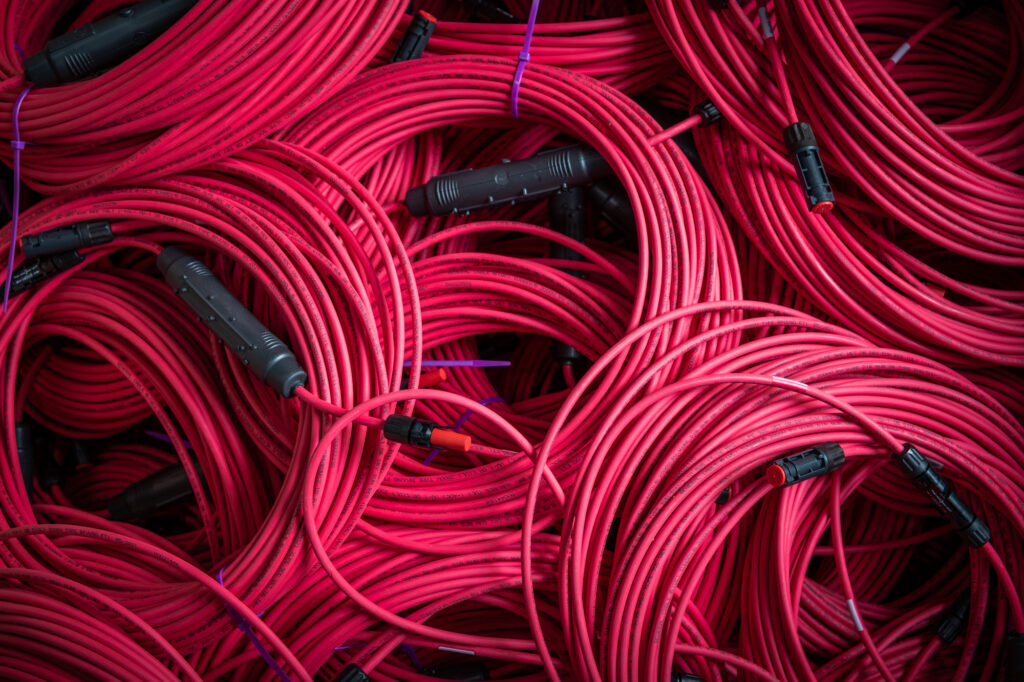
- Roll out the prefabricated BLA trunks
- Hang the BLA along the messenger wire system
BLA N-S Components
- Roll out the prefabricated string wire
- Hang the string wire in the cable management solution.
- Make the connection between the string wire and BLA pigtails
How the installation process was dramatically different
IPC preparation challenges we clearly saw
- Each pigtail must be sized, stripped, and landed manually in the field, introducing major risk for human error and inconsistent quality.
- IPC locations must be determined on site by interpreting drawings, adding placement inconsistencies and more opportunities for mistakes.
IPC installation challenges we noticed
- Each pigtail must be physically held in place during crimping, often requiring a second person to manage hands, tools, and alignment inside a tight space.
- Installers must confirm correct crimp die selection, proper cable alignment, and proper seating before compression.
- The crimping action is aggressive and cuts deeply through insulation, creating an invasive mechanical connection.
- The IPC housing must be split open, exposing sealing gel to dirt, dust, debris, and insects—common in real solar environments.
- Gel transfers to the installer’s hands, creating a slippery and unsafe grip environment.
- Reassembling the IPC housing requires precise alignment that is much harder in the field than on paper.
- Even when complete, the IPC appears “unfinished” and visually vulnerable, increasing concern about long-term durability.
The installers’ IPC process looked like this:
- measuring
- cutting
- stripping
- holding pigtails in place
- checking alignment
- compressing
- checking the crimp
- hoping the gel stayed clean and/or removing debris
- snapping the housing back together
- fighting gel on their gloves
- wiping dust off the parts
- checking the seal
- attaching to messenger wire
Some parts of this process surprised the crew. And as they worked, we saw something you can’t capture in a spec sheet: the stop-and-go rhythm, the manual nature of the job, the interruptions, the alignment checks, the second set of hands needed almost every time. One of the installers shook his head halfway through: “Every connector is basically its own mini job.”
Meanwhile, the BLA workflow took minutes, not hours
With Shoals BLA, everything was pre-engineered. Everything fit. No surprises. Each one of these steps carries risk. BLA eliminates all of them. Factory-terminated harnesses mean:
- No stripping
- No cutting
- No exposed gel
- No special tools
- No alignment checks
- No multi-step sealing requirements
Just roll, hang, and plug. That’s it. And the installers looked at us like, “Seriously… we are done?”
The results of BLA vs IPC time study: BLA installed upwards of 40% faster
Even with a crew that did not have much experience with BLA before, the difference was immediate and consistent. BLA installed up to 40% faster. And here’s what shocked the installers most: the IPC strings didn’t just take longer, but they took different amounts of time every single time. BLA, on the other hand, delivered the same result again and again.
Key Findings
- IPCs introduced a lot more touchpoints, increasing labor hours and error risk.
- BLA installed upwards of 40% faster across the 18 strings.
- IPC workflow time varied significantly.
- BLA time remained stable due to its standardized, factory-built design.
Why BLA outperforms IPCs in the field
Watching the crew work side by side made the difference painfully obvious. The structural reasons behind the time savings align with what EPCs see daily.
1. Prefabrication eliminates field terminations
IPCs depend on heavy field labor. BLA removes this dependence. Below are the exact IPC realities the study confirmed. These details often go unseen until a crew is on site, under pressure, in the dust, wind, cold, or heat.
2. IPCs are vulnerable to errors and conditions
During installation we observed that more terminations mean more risk:
- Torque variation
- Environmental contamination
- Moisture intrusion
- Oxidation
- Improper seating
- Misalignment
One installer jokingly said: “Whoever designed these thinks we have three hands. We don’t.”
3. BLA is factory-sealed and tested for 35+ year service life
While IPCs rely on field craftsmanship and environmental luck, BLA’s patented overmold/undermold technology is its superpower, locking in performance long before it reaches the site. This design creates hermetically sealed, factory-controlled connections that are fully tested before they leave Shoals’ Tennessee facility. The result is a clean, robust, long-life solution aligned to real EPC demands.
BLA trunk bus solutions:
- use Shoals’ overmold/undermold process
- are hipot tested and pull tested
- eliminate copper/aluminum oxidation exposure
- remove every guesswork element from wiring
For EPCs and developers this means labor savings and shorter schedules
1. Reduction in labor hours
Fewer terminations mean fewer electricians resulting in fewer bottlenecks on critical paths.
2. Compressed schedules
Predictable string times help planners forecast daily output and hit milestones.
3. Lower rework
IPCs require follow-up quality checks that are nearly impossible to perform in the field, leaving them a black box with failure risks that may only surface later. BLA arrives factory-verified.
4. More efficient crew utilization
Installers can stay productive even in dust, heat, wind, and rain. They can avoid downtime from weather or complex tool setups and deploy smaller crews.
5. Risk reduction
BLA removes all field variability by delivering a sealed, factory-quality termination every time. In large-scale solar, reliability is not a nice-to-have. It is fundamental to long-term asset performance.

Conclusion: when every minute counts, BLA delivers where IPCs can’t
The Shoals BLA vs IPCs time study didn’t just validate BLA’s installation performance. It told a real, human story about how work actually gets done in the field. The study confirmed that BLA is faster, easier, safer, more consistent, and far more predictable than IPCs.
Want to see the full time study? Want to design your next project with BLA?
Reach out to us and we will walk your team through the complete analysis, installation methods, optimization strategies, and EBOS best practices for utility-scale solar. We can also help you apply BLA to your next project.